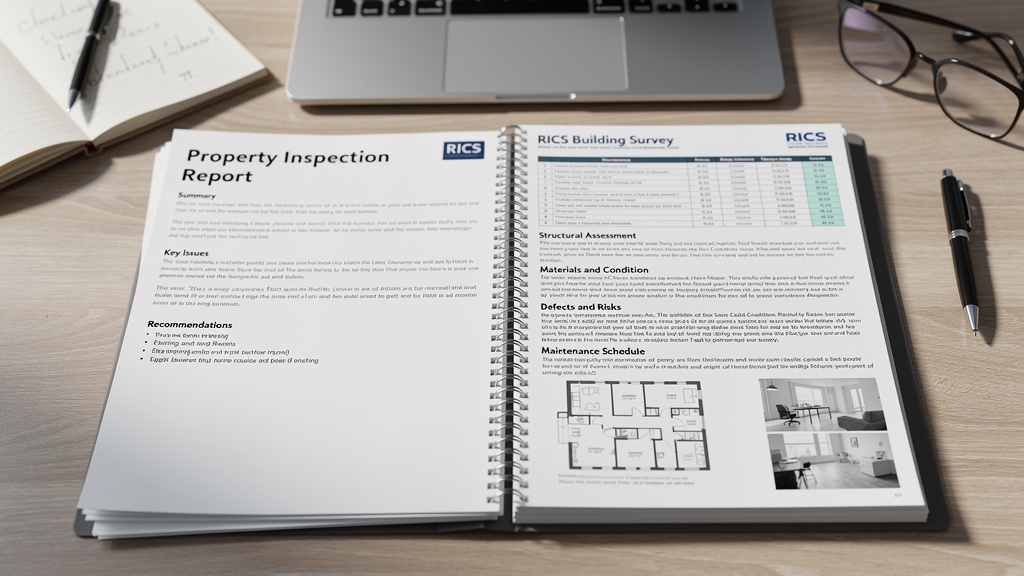
If you're buying a property in Nottingham and trying to decide between a Level 2 home survey and a Level 3 building survey, you're not alone. It's one of the most common questions our team gets asked every single week. The good news? Once you understand what each survey actually covers, the decision usually becomes pretty straightforward.
In this guide, I'm going to walk you through exactly what a RICS Level 2 and a RICS Level 3 survey each involve, the key differences between them, and the specific situations where you should choose one over the other.
What Is a RICS Level 2 Home Survey?
The RICS Level 2 home survey — formerly known as the HomeBuyer Report — is our most popular service. It's designed for standard residential properties that are in reasonable condition. That covers a lot of ground: think 1960s semis in Gedling, 1990s detached houses in West Bridgford, or well-maintained 1930s terraces in Beeston.
The Level 2 survey uses a traffic-light condition rating system (1 = no action, 2 = monitor, 3 = urgent attention required). Every element of the property — from the roof covering and chimney to the damp proof course, drainage, and services — gets one of these ratings. It's designed to be thorough but also genuinely readable, which is something I care about a lot. What use is a survey report if you can't understand what it's telling you?
What a Level 2 Survey Covers
Roof condition, walls, floors, ceilings, windows and doors, services (gas, electrics, water), drainage, damp readings throughout, legal risk summary, and any specific concerns that need professional investigation. Report delivered within 48 hours.
A Level 2 is not appropriate for every property. It has limitations — it won't look inside roof voids, it doesn't provide detailed structural analysis, and it doesn't give estimated repair costs as standard. For many standard homes, that's absolutely fine. For older or more complex properties, you need more.
What Is a RICS Level 3 Building Survey?
The Level 3 building survey — previously called the Full Structural Survey — is the most comprehensive type of residential survey available. It's a deep-dive inspection of a property's structure, fabric, and systems.
Where a Level 2 checks the accessible surface elements of a property, a Level 3 goes further: inspecting roof voids, checking subfloor spaces, analysing the structural integrity of walls, examining extensions and alterations, and providing detailed written descriptions of defects — including estimated repair costs.
When I carried out a Level 3 survey on a Victorian detached in Carlton last year, the Level 2 equivalent would have flagged a damp reading in the front bay window and called it a "monitor" situation. The Level 3 told a very different story: there was a failed lead flashing above the bay, water had been tracking down into the wall cavity for several years, and the joist end at the base of the bay was showing significant softening. Repair cost estimate: £3,800. The buyers negotiated it off the price. That's why Level 3 exists.
The Key Differences: Level 2 vs Level 3
| Feature | Level 2 Home Survey | Level 3 Building Survey |
|---|---|---|
| Condition ratings | ||
| Detailed defect descriptions | Moderate | Comprehensive |
| Structural analysis | Limited | |
| Roof void inspection | ||
| Subfloor inspection | ||
| Estimated repair costs | Optional add-on | Included |
| Extension/alteration analysis | Basic | Detailed |
| Report delivery | Within 48 hours | Within 48 hours |
When Should You Choose a Level 2 Survey?
A Level 2 home survey is the right choice when:
- The property was built after 1900 and is in broadly good condition
- It's a standard type of construction (traditional brick and block, or brick and timber frame)
- There are no visible signs of significant structural movement or alterations
- You're buying a standard semi-detached, detached, or terraced house in the mainstream of the Nottingham market
- You want a clear, focused report without unnecessary complexity
A typical example: a 2-bedroom 1980s semi in Hucknall. Standard construction, well-maintained, no obvious signs of movement. A Level 2 will give you everything you need. We'd deliver the report within 48 hours and follow up with a call to talk through the findings.
When Should You Choose a Level 3 Building Survey?
A Level 3 survey is essential when any of the following apply:
- The property was built before 1900 (Victorian, Georgian, or earlier)
- It's a large, unusual, or non-standard property
- You can see visible signs of cracking, movement, or structural concern
- The property has had significant extensions or alterations
- It has a thatched or slate roof, or other non-standard roofing
- It's in a known subsidence or flood risk area
- You're planning significant renovation or structural works after purchase
- You want the most complete possible picture of the property's condition
"If you're spending £250,000 or more on a Victorian property, the extra cost of a Level 3 survey is the best investment you'll make. I've never had a client who got a Level 3 survey and said it wasn't worth it — but I have met many who wish they'd chosen one over a Level 2."
— James Whitmore, Director, Nottingham Surveyors
A Real-World Example from Nottingham
Last year, we were asked to survey a 1920s semi-detached in Arnold. The buyer — a couple buying their second home — asked us whether they needed a Level 2 or Level 3. Based on the asking price, the age of the property, and the fact that they mentioned the vendor had "extended at the back at some point," we recommended a Level 3 building survey.
The survey revealed:
- The rear extension had been built without proper cavity tray damp protection — water was tracking into the junction wall
- A partition wall in the dining room had been partially removed and a steel beam inserted — but not to current Building Regulations depth
- The roof covering at the rear slope was nearing end of life (5–8 years remaining)
Total estimated repair costs: approximately £11,500. The buyers went back to the vendor and agreed a £9,000 price reduction. Their surveyor's fee paid for itself many times over.
What About the Level 1 Condition Report?
If your property is a post-2000 new build or modern apartment in excellent condition, a RICS Level 1 Condition Report may be sufficient. It provides basic traffic-light condition ratings and highlights any urgent issues — but it's deliberately limited in scope. For most buyers in the Nottingham market, a Level 2 or Level 3 is more appropriate.
Can't Decide? Here's Our Quick Guide
Quick Decision Guide
- Post-2000 new build in excellent condition? → Level 1
- Standard home, built after 1900, reasonable condition? → Level 2
- Pre-1900, large, unusual, extended, or visibly imperfect? → Level 3
- Any doubt? → Choose Level 3. The extra depth of information is almost always worth it.
Frequently Asked Questions
Yes. The RICS rebranded the HomeBuyer Report as the Level 2 Home Survey in 2021. The underlying scope and standards are very similar, though the 2021 RICS Home Survey Standard introduced some improvements to consistency and clarity.
Broadly yes. The Full Structural Survey was rebranded as the Level 3 Building Survey under the 2021 RICS Home Survey Standard. A Level 3 is the most comprehensive survey available for residential properties.
A Level 2 typically takes 2–3 hours on site for a standard 3-bedroom property. A Level 3 takes 3–5 hours for the same property — often longer for larger or more complex homes. Both result in reports delivered within 48 hours.
Yes, generally speaking — as long as you let us know before the inspection. It's much more difficult to upgrade after the surveyor has visited, as a Level 3 requires a different and more time-consuming on-site approach.
No survey is omniscient. A Level 3 covers everything that is accessible and visible at the time of inspection — but it can't look behind fitted kitchen units, inside sealed walls, or under permanent floor coverings. It will, however, flag any areas that need specialist investigation (drains, structural engineers, etc.) and recommend next steps.

Related Articles
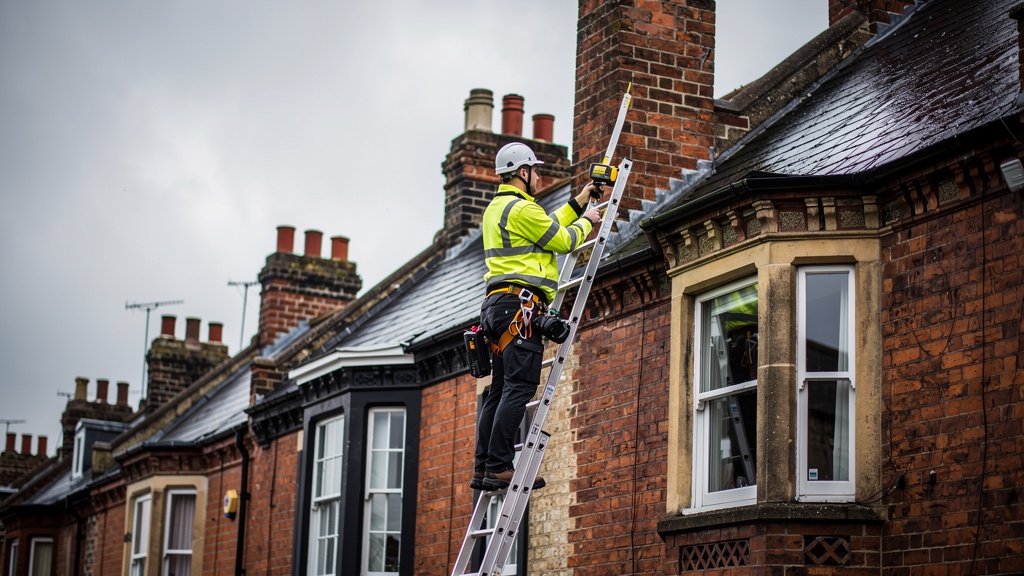 Building Surveys
When Do You Need a Level 3 Building Survey?
Read Article First-Time Buyers