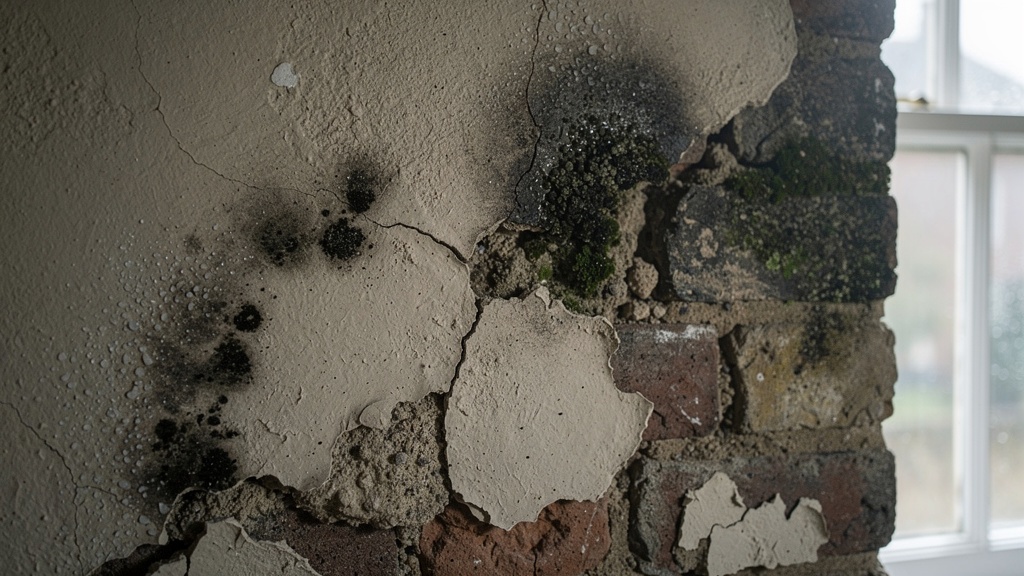
If you're planning building work near a shared wall in Nottingham — whether that's a loft conversion, rear extension, or basement excavation — you almost certainly need to think about the Party Wall etc. Act 1996. It's one of those pieces of legislation that catches homeowners completely off guard, and the consequences of ignoring it can be serious and expensive.
This guide covers everything you need to know about party walls in Nottingham: what the law says, when you need a party wall surveyor, how the process works, and what it typically costs. Whether you're the building owner about to start work or an adjoining owner whose neighbour has just notified you, this article will help you understand your rights and responsibilities.
What Is a Party Wall?
A party wall is a wall or structure shared between two properties — typically the dividing wall between two terraced or semi-detached houses, or a wall that sits on the boundary line between two properties. The term also covers floors between flats and certain boundary walls and garden structures.
Nottingham has an enormous stock of Victorian and Edwardian terraced housing — areas like Sherwood, Mapperley, Sneinton, Hyson Green, and Bulwell are full of them. Most of these properties share party walls with their neighbours. When owners of these homes want to carry out building work, the party wall process becomes relevant almost immediately.
The Party Wall etc. Act 1996 applies specifically in England and Wales. It sets out a legal framework for managing work near or on party walls, including the obligation to serve formal notice on affected neighbours before work begins.
When Does the Party Wall Act Apply?
The Act applies in three main situations:
The Three Triggers for the Party Wall Act
- Section 1 – New wall on the boundary: Building a new wall at or astride the boundary line between two properties.
- Section 2 – Work on a party wall: Cutting into, raising, underpinning, or demolishing a shared wall. This includes most loft conversions involving the party wall and many rear extensions.
- Section 6 – Excavation near the boundary: Excavating within 3 metres of a neighbour's building if going deeper than their foundations, or within 6 metres if the new excavation cuts a line drawn down at 45° from the bottom of a neighbour's foundations.
In practice, the most common triggers in Nottingham are loft conversions (which almost always involve cutting into the party wall to insert padstones and steel beams) and rear extensions (which often involve raising or rebuilding part of the party wall, or excavating close to the neighbour's foundations).
What Happens If You Don't Serve Party Wall Notice?
This is where many homeowners come unstuck. The Party Wall Act requires you to serve formal written notice on all affected adjoining owners before starting any notifiable work. Failure to do so doesn't automatically make your work illegal — but it does expose you to significant risk.
If you start work without notice and your neighbour suffers damage, they can seek an injunction to stop your works. They can also pursue you for the cost of repairs — and the fact that you didn't comply with the Act will not help your case. I've seen situations in Nottingham where perfectly reasonable extension projects turned into lengthy and expensive legal disputes because the building owner didn't follow the party wall process. It's not a burden worth creating for yourself.
Equally, if you're the adjoining owner and your neighbour is about to start work without notice, you have the right to require them to comply with the Act before proceeding.
How the Party Wall Process Works
The party wall process follows a fairly defined sequence:
Step 1: Serve Party Wall Notice
The building owner (the one doing the work) must serve written notice on all adjoining owners. For Section 2 work on a party wall, notice must be given at least two months before the planned start date. For Section 6 excavation work, the notice period is also two months. For Section 1 work (new boundary walls), one month's notice is required.
The notice must include your name and address, the address of the building, a description of the proposed work, and the intended start date. It doesn't have to be served by a solicitor or surveyor — you can do it yourself — but getting it right matters.
Step 2: Adjoining Owner's Response
The adjoining owner has 14 days from receipt of the notice to respond in writing. They can either:
- Consent — in writing, accepting the work. This is the simplest outcome and avoids the need for a formal Award.
- Dissent and agree to a single agreed surveyor — both parties appoint the same surveyor to act impartially for both.
- Dissent and appoint their own surveyor — in which case each party has their own surveyor, and the two together (or a third surveyor if they can't agree) will produce a Party Wall Award.
If the adjoining owner does nothing within 14 days, a deemed dispute arises automatically, and each party must appoint a surveyor.
Step 3: Schedule of Condition
Once surveyors are appointed, one of the first things they will typically arrange is a schedule of condition. This is a detailed photographic and written record of the state of the adjoining owner's property before work begins. It acts as a baseline — if any damage occurs during or after the works, the schedule of condition is the reference point for assessing what existed before.
This step is genuinely important. I've dealt with party wall disputes in Nottingham where a crack appeared in a neighbour's plaster after a loft conversion was completed. Without a schedule of condition, it becomes very difficult to determine whether the crack was pre-existing or caused by the works. With a thorough schedule, the position is clear.
Step 4: The Party Wall Award
The Party Wall Award (also called an Agreement) is a legal document prepared by the appointed surveyor(s) that sets out:
- The work that is permitted under the Award
- How and when the work will be carried out
- The rights of access for the building owner and their contractors
- The schedule of condition of the adjoining property
- A mechanism for resolving any damage claims after the work is complete
The Award is legally binding. Once it's in place, work can proceed in accordance with its terms. Either party can appeal the Award to a County Court within 14 days of service, but appeals are rare.
Step 5: Completion and Any Damage Claims
Once the works are complete, the building owner should make good any damage to the adjoining owner's property caused by the works. If there's a dispute about whether damage was caused by the works (the schedule of condition will help here), the appointed surveyors can resolve it.
Who Pays for the Party Wall Surveyor?
In the majority of cases, the building owner pays for everything — their own surveyor's fees and the adjoining owner's surveyor's fees. This is a fundamental principle of the Act: the person benefiting from the work (the building owner) meets the costs.
There are limited exceptions — for example, if the adjoining owner requests work that goes beyond what the building owner needs, they may be asked to contribute to the additional cost. But in the standard scenario, the adjoining owner can appoint their own surveyor at no cost to themselves.
Typical Party Wall Survey Costs in Nottingham
As a guide, party wall surveyor fees in Nottingham typically fall in the following ranges:
- Agreed surveyor (acting for both parties): £700–£1,200 for a straightforward loft conversion or single-storey extension
- Building owner's surveyor fee: £600–£900
- Adjoining owner's surveyor fee: £600–£1,000 (paid by the building owner)
- More complex cases (multiple adjoining owners, extensive excavation works): £1,500–£3,000+
These are indicative figures only. Fees vary depending on the complexity of the work and the number of adjoining owners involved.
Do I Need a Party Wall Surveyor or Just an Agreement?
If your neighbour consents to your notice in writing, you don't technically need a party wall surveyor or a formal Award. You can proceed on the basis of the written consent. However, even in this scenario, we strongly recommend obtaining a schedule of condition of the adjoining property before work starts. It provides important protection for both parties.
If the adjoining owner dissents (or fails to respond within 14 days), a surveyor becomes a requirement, not an option.
Party Walls in Nottingham: Common Scenarios
In our experience carrying out party wall work across Nottingham and Nottinghamshire, the most common situations we deal with are:
Loft Conversions in Victorian Terraces
Probably the most frequent party wall scenario in Nottingham. A terraced house owner wants to convert the loft — almost invariably this involves cutting into the party wall to install steelwork. We've dealt with this extensively in areas like Forest Fields, Lenton, Sneinton, Hyson Green, and Basford. These projects almost always require formal party wall notice to be served on both adjoining neighbours.
Single and Double-Storey Rear Extensions
Many Nottingham houses have a relatively shallow rear garden and share boundaries closely with neighbours. When extensions involve digging new foundations close to or deeper than the neighbour's footings, Section 6 notice is triggered. Even if the excavation doesn't technically trigger Section 6, the Party Wall Act may still apply if the extension involves the party wall itself.
Basement Conversions
Less common in Nottingham than in London, but increasingly popular in larger Victorian properties in areas like Park Estate and The Meadows. Basement work almost always triggers the Act, often under both Section 2 and Section 6, and can be complex to manage given the proximity of foundations.
Boundary Disputes and New Fencing
Erecting a new wall or fence on the boundary can trigger the Act, though many boundary fence replacements don't involve the party wall and therefore fall outside the legislation. If you're not sure, it's always worth a quick consultation with a party wall surveyor.
How to Choose a Party Wall Surveyor in Nottingham
The party wall surveyor's role is fundamentally an impartial one — even your own appointed surveyor owes a duty to both parties. However, the practical reality is that an experienced local surveyor who understands Nottingham's housing stock will produce a more useful and accurate schedule of condition, and will be better placed to assess any damage claims.
Key things to look for in a party wall surveyor:
- RICS membership or CIOB accreditation — professional membership indicates accountability and competence
- Experience with the type of work involved — loft conversions and extensions each have their own typical issues
- Local knowledge — a surveyor familiar with Nottingham's Victorian terraces will understand the typical construction methods and common vulnerabilities
- Clear fee transparency — ask for a written fee estimate before agreeing to appoint them
- Responsiveness — party wall matters often have tight timelines; a surveyor who is difficult to reach will slow the process down significantly
Common Mistakes to Avoid
After years of dealing with party wall matters in Nottingham, here are the mistakes I see most often:
- Starting work without serving notice — this is the most serious error and the one with the biggest potential consequences.
- Serving notice too late — remember that the two-month notice period runs from the date the neighbour receives the notice, not from the date you intend to start.
- Not keeping a copy of the notice and evidence of service — if the adjoining owner later claims they never received it, you need to be able to demonstrate you served it correctly.
- Assuming verbal agreement is sufficient — the Act requires written consent. A verbal "yes, no problem" from your neighbour is not enough.
- Skipping the schedule of condition — even with written consent, the schedule of condition protects both parties and is worth doing.
- Assuming all boundary work is covered — not all work near a boundary triggers the Act. Getting a quick professional opinion on whether notice is needed is often worthwhile before committing to a full party wall process.
"Party wall notices are one of those things that feel like bureaucratic box-ticking — until something goes wrong. I've seen straightforward loft conversions in Nottingham turn into expensive, stressful disputes that took months to resolve, simply because the notice wasn't served correctly at the start. Spending a few hundred pounds on proper party wall advice upfront is almost always significantly cheaper than dealing with a dispute after the fact."
— James Whitmore, Director, Nottingham Surveyors
Frequently Asked Questions About Party Wall Surveys
For most party wall work (under Section 2 or Section 6 of the Act), you must serve notice at least two months before the planned start date. For Section 1 work (new boundary walls), one month's notice is required. These are minimum periods — in practice, it's often sensible to start the process earlier, as any dispute or dissent will need time to resolve.
Not outright — the Party Wall Act gives the building owner the right to carry out notifiable works, even if the neighbour objects. What the neighbour can do is dissent, which triggers the surveyor appointment process and results in a formal Party Wall Award that governs how the work is carried out. The Award may include conditions that protect the adjoining owner, but it cannot prevent the works from happening if they are lawful.
A schedule of condition is a detailed photographic and written record of the state of the adjoining property before building work begins. It documents existing cracks, damp patches, and other defects. If damage occurs after the works, the schedule of condition is used to determine whether it was pre-existing or caused by the works. Without one, any post-works damage claim becomes a matter of word against word.
In most cases, yes. Loft conversions in semi-detached or terraced properties almost always involve cutting into the party wall to install steel beams and padstones. This falls under Section 2 of the Act and requires two months' notice. Some loft conversions (for example in detached properties with no shared walls) may not trigger the Act at all — but if in doubt, take professional advice.
First, read the notice carefully. You have 14 days to respond. Your options are: (1) consent in writing; (2) dissent and agree on a single surveyor; or (3) dissent and appoint your own surveyor. If you dissent and appoint your own surveyor, the building owner will pay their fees. If you're at all uncertain about the scope of the works, appointing your own surveyor is worth considering — it costs you nothing and ensures your interests are properly protected.

Related Articles
 Building Surveys
When Do You Need a Level 3 Building Survey?
Read Article Buyer's Guide